
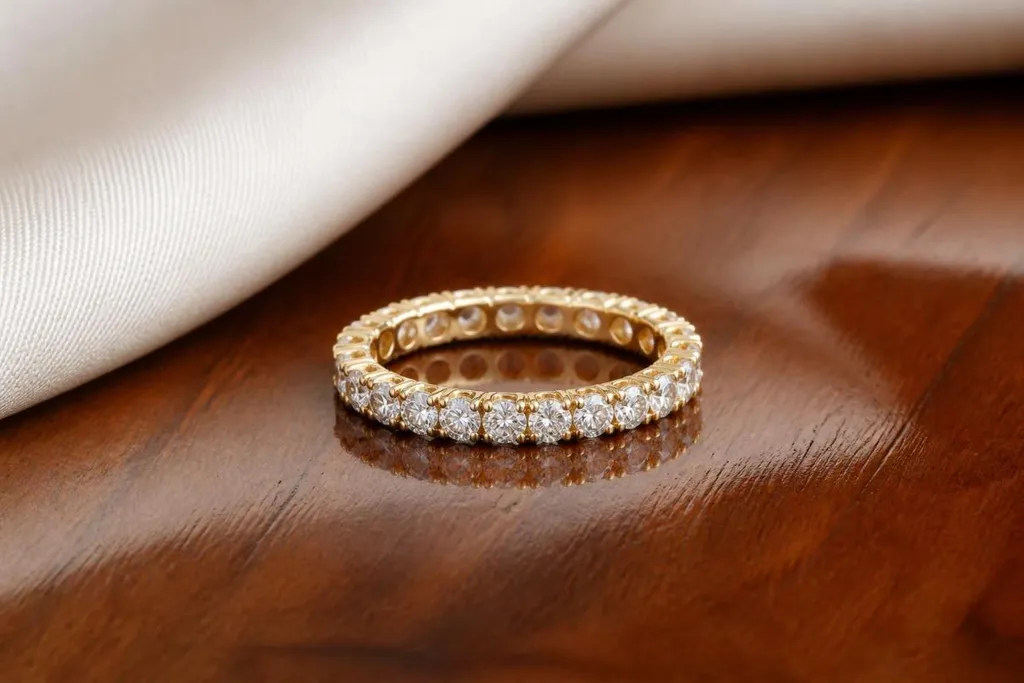
An eternity band does not have to play a supporting role. While finer designs are often chosen to sit quietly beside an engagement ring, statement eternity bands take the opposite approach: larger stones, stronger proportions and more distinctive settings give the band enough presence to become a focal piece in its own right. That makes them equally compelling as wedding rings, anniversary pieces or jewellery chosen to mark an important personal milestone.
For those exploring timeless statement eternity wedding band designs, the challenge is finding boldness without losing balance. A substantial eternity ring should feel deliberately proportioned rather than simply oversized. Stone shape, individual gemstone size, coverage and setting height all influence whether the finished design feels elegant on the hand and remains practical enough for regular wear.
What Makes an Eternity Band a Statement Piece?
Visual impact can come from several directions. Increasing individual stone size is the most obvious, but it is not the only way to create a statement eternity ring.
A broader setting can give the band greater presence across the finger, while distinctive gemstone shapes can create a more architectural appearance. Alternating shapes or carefully arranged stone patterns may introduce rhythm and detail without relying solely on overall carat weight.
This distinction matters because two eternity bands of similar total gemstone weight can look remarkably different. A design using numerous smaller stones may create a continuous surface of sparkle, while fewer, larger stones allow each shape and setting to become more noticeable.
The intended role of the ring should guide the scale. A wedding band worn beside an elaborate engagement ring may need careful restraint, whereas an anniversary eternity ring intended to be worn alone can comfortably carry greater visual weight.
Stone Shape Changes the Character of Bold Designs
Round brilliant stones create a familiar sparkle and can produce a particularly lively statement band when their size is increased. Their curved outlines also help soften the visual effect of a substantial row of gemstones.
Emerald-style stones create a different mood. Their straight edges and step facets give the ring a cleaner, more structured rhythm, making them particularly effective for someone who prefers architectural jewellery.
Oval stones introduce length and softer lines, while radiant or other angular cuts can combine geometric outlines with more energetic light performance.
Mixed-shape arrangements provide another route to individuality. Rather than repeating one silhouette around the finger, contrasting cuts can turn the eternity band into a more distinctive composition.
The scale should still suit the wearer. Larger stones can look beautifully proportioned on a broad or long finger, while someone with smaller hands may prefer a slightly finer interpretation that provides impact without extending uncomfortably between neighbouring fingers.
Full or Partial Coverage Requires Practical Thought
Full eternity designs place stones around the complete circumference of the ring, ensuring that the statement effect remains visible even if the band rotates. With larger stones, however, that coverage can create significant depth and texture beneath the finger.
Partial or three-quarter eternity settings offer an alternative. They preserve substantial face-up gemstone coverage while leaving some plain precious metal underneath, which may improve comfort for certain wearers.
Sizing also deserves consideration. Full eternity rings can be difficult to resize because gemstones occupy the entire band. Designs with a plain metal section may offer more flexibility, although possibilities depend on the individual construction.
Setting security becomes particularly important with larger stones. A statement ring will naturally have more exposed gemstone surface, so robust claws or other appropriate setting methods need to balance visibility with protection.
Decide How the Band Will Be Worn
A bold eternity band can work very differently depending on whether it is worn alone, stacked or paired with an engagement ring.
As a standalone wedding or milestone ring, greater width and stone size can be highly effective because the design does not need to share attention with another centrepiece.
For stacking, proportion becomes more complex. A substantial eternity band beside an equally elaborate engagement ring may create a deliberately luxurious effect, but it can also feel crowded if the settings compete for space.
Metal can help define the relationship. Platinum and white gold create a cool, cohesive backdrop for colourless stones, while yellow gold introduces visible warmth between them. Rose gold offers a softer contrast.
Physical contact between rings should also be checked, as raised settings that continually rub against one another can cause unnecessary wear.
Final Thought
Statement eternity bands are designed to be noticed, but lasting impact comes from more than simply increasing stone size. Shape, coverage, setting construction and the proportions of the wearer's hand all contribute to whether a bold design feels considered.
Choose with the ring's purpose in mind. A wedding band may need to complement an engagement ring, while a milestone piece can confidently stand alone. When scale and practicality are balanced, a statement eternity band can mark an important occasion with presence while remaining elegant enough to wear long after the celebration itself.